
The Breed
The First Gaited Horse in North America
Living Appalachian History
Tucked into the rolling hills and rugged hollers of Eastern Kentucky, the story of the Mountain Pleasure Horse begins not in show rings or registries—but in survival.
Long before the breed had a name, these horses were quietly shaping themselves alongside the people who depended on them. In the 1800s, settlers in the Appalachian Mountains needed a horse that could do it all: navigate steep, rocky terrain, work small farms, travel long distances, and carry riders in comfort for hours at a time. Out of that need, and through generations of practical, no-nonsense breeding, the Mountain Pleasure Horse was born.
A Horse Built by the Mountains
The origins of the Mountain Pleasure Horse are deeply rooted in early American history. Their bloodlines trace back to Spanish horses brought to the New World, as well as gaited horses from the British Isles. Perhaps most notably, they carry the influence of the now-extinct Narragansett Pacer—one of America’s earliest and most important gaited breeds. But what truly defines their origin isn’t just what they came from—it’s where they developed. In the isolated communities of Appalachia, there was no room for excess or inefficiency. Horses had to be hardy, sure-footed, and easy to keep. They needed to thrive on limited resources and still perform day after day. Over time, only the most adaptable and useful horses were bred, creating a type that was uniquely suited to mountain life. These weren’t horses bred for appearance; they were bred because people’s lives depended on them.
In a time before paved roads and modern transportation, the Mountain Pleasure Horse was more than just useful—it was essential. Families relied on them to travel miles across unforgiving terrain, whether heading into town, visiting neighbors, or attending church. Farmers depended on them for daily work. And perhaps most importantly, they offered something rare: comfort. Unlike trotting horses, Mountain Pleasure Horses possess a natural four-beat gait—often called a saddle rack—that allows the rider to glide smoothly over long distances without the jarring bounce of a trot. For people who spent hours in the saddle, this wasn’t a luxury. It was everything. They quickly became known by names like “Old Kentucky Saddlers” and “Mountain Horses,” a reflection of both their heritage and their role in everyday life.
Bloodlines That Shaped a Nation
Even today, the Mountain Pleasure Horse stands apart in quiet, understated ways. Their smooth gait is perhaps their most recognizable feature—and remarkably, it often appears naturally in foals within hours of birth. There’s no need to force or manufacture it. It’s simply part of who they are. They are known for their gentle, willing temperament—the kind of horse that feels like a partner rather than a project. They’re steady, intelligent, and deeply people-oriented, making them just as suitable for a beginner rider as they are for someone experienced. And then there’s their resilience.
These horses were shaped by an environment that demanded toughness. They are sure-footed on uneven ground, efficient in their movement, and often described as “easy keepers”—able to maintain condition without excessive feed or care. Perhaps most importantly, they are considered a foundational piece of American equine history. The same traits that made them invaluable in the mountains helped influence and shape many of the gaited breeds we recognize today.
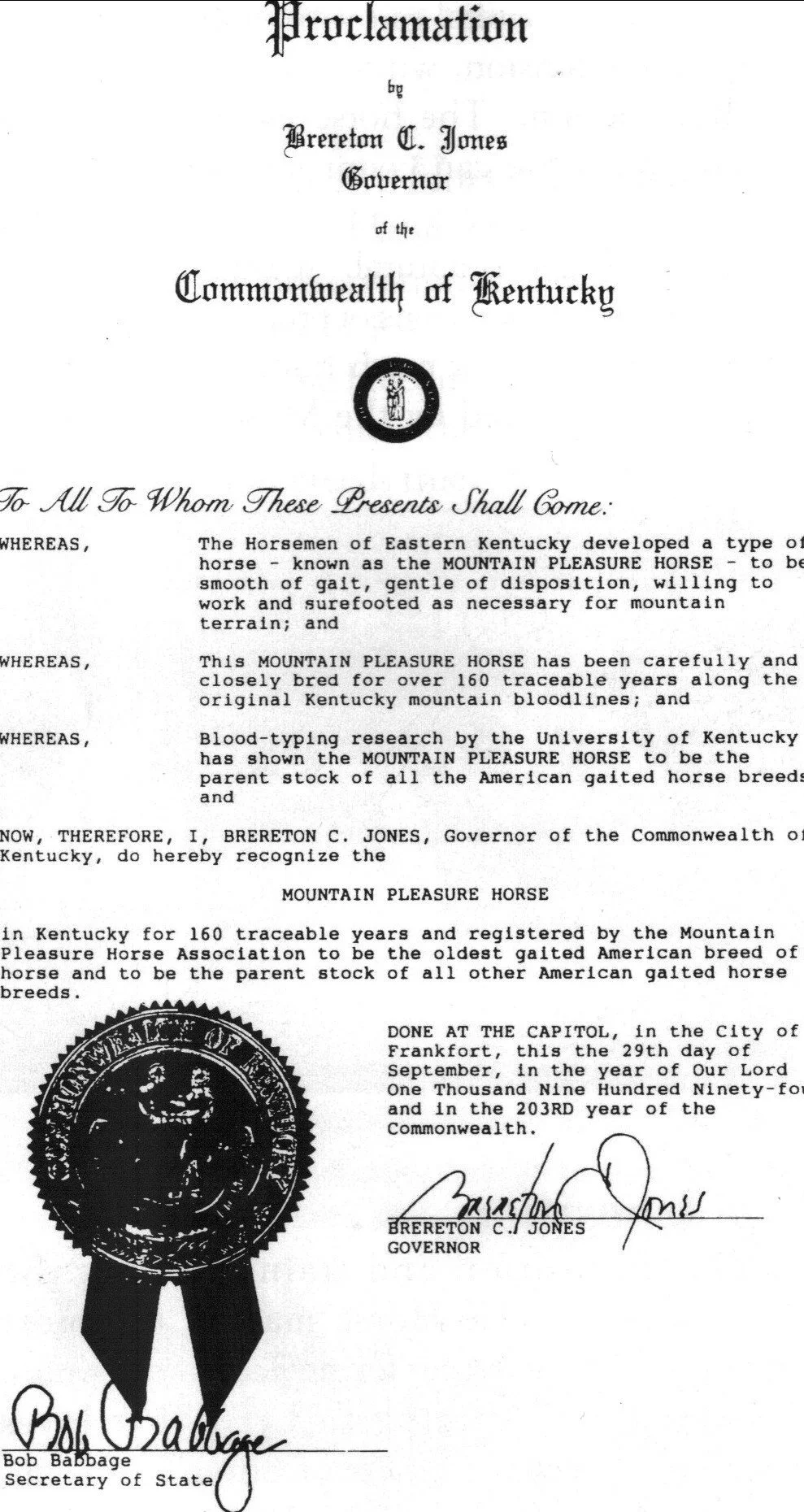
The genetic story of the Mountain Pleasure Horse is one of quiet influence. From Spanish colonial horses came endurance and natural gait. From British Isles breeds like the Hobby and Galloway came additional refinement and movement. And from the Narragansett Pacer came a legacy that still echoes in modern gaited horses. Over time, these influences blended into a distinct and consistent type—one that would go on to contribute to breeds like the American Saddlebred, Tennessee Walking Horse, and Rocky Mountain Horse. What’s remarkable is that some Mountain Pleasure Horse bloodlines can be traced back nearly 200 years. In a country where many breeds have been heavily altered or redefined, that kind of continuity is rare. They are, in many ways, a living snapshot of early American horsemanship.
A Breed at Risk
And yet, despite their history and significance, the Mountain Pleasure Horse faces an uncertain future. As roads improved and machines replaced horses in both transportation and agriculture, the need for a versatile, all-purpose mountain horse began to fade. The very qualities that once made them indispensable became less in demand. At the same time, some of the breeds they helped create rose to prominence, overshadowing their predecessor.
Efforts to preserve the breed led to the formation of a registry in the late 20th century, but with it came challenges. Limited population numbers and restricted breeding pools have made it difficult to expand without risking the loss of genetic diversity. Today, the Mountain Pleasure Horse is considered an endangered breed. Its numbers remain small, and its future depends largely on the dedication of breeders and enthusiasts who recognize its value—not just as a riding horse, but as a piece of living history.